
1. Introduction
Do you lie in bed at night, waiting for sleep to arrive, only to find your mind becoming more active? Perhaps you think about tomorrow’s responsibilities, replay conversations from the day, or repeatedly check the clock. You may feel tired but still struggle to fall asleep.
You are not alone. Many people experience occasional difficulty sleeping. Stress, irregular routines, caffeine, environmental disturbances and certain health conditions can all contribute to sleep problems.
The good news is that understanding what may be keeping you awake can help you make sensible changes. In this article, Sleep Wisdom explores common reasons for sleeplessness, practical steps that may help, useful bedroom products and signs that it is time to seek professional advice.
2. Why Is It So Difficult to Fall Asleep?
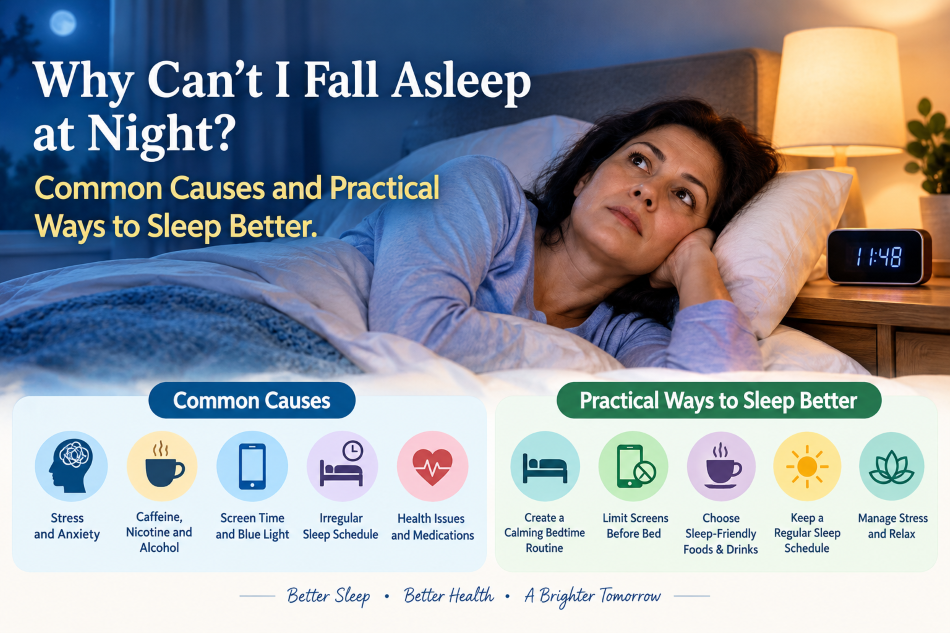
There is no single explanation for every person’s sleep difficulties. Several factors may contribute.
Stress and an overactive mind
Financial concerns, family responsibilities, work pressures and personal worries can make it difficult to relax at bedtime. Worrying about whether you will fall asleep can make the situation even more frustrating.
Try setting aside 10–15 minutes earlier in the evening to write down your concerns and any tasks you need to complete the following day. This may help you avoid mentally rehearsing them when you go to bed.
Irregular sleeping hours
Your body follows an internal clock that responds to light, darkness and daily routines. Going to bed and waking up at widely different times may make it harder to feel sleepy at the desired hour.
Aim to wake up at approximately the same time every day, including weekends. Choose a bedtime that gives you enough opportunity to sleep.
Caffeine and other stimulants
Coffee, tea, cola, energy drinks and chocolate can contain caffeine. Its stimulating effects may continue for several hours.
If you have trouble falling asleep, consider avoiding caffeine for at least six to eight hours before bedtime, or longer if you are particularly sensitive.
Alcohol is not a reliable sleep remedy. Although it may initially make you drowsy, it can disturb sleep later in the night.
Screens and bright lights
Using a phone, tablet or television late at night may keep you mentally engaged and expose you to light that affects your normal sleep-wake rhythm.
Try putting electronic devices aside approximately one hour before bedtime. Dim the lights and choose a quiet activity instead.
Physical discomfort and medical conditions
Pain, acid reflux, breathing difficulties, frequent urination, restless legs and some medicines can interfere with sleep. Anxiety and depression may also affect sleeping patterns.
If sleeplessness begins after starting a medicine or changing its dose, discuss it with your healthcare professional. Do not stop prescribed treatment on your own.
These are possible contributors, not a diagnosis. The US National Heart, Lung, and Blood Institute provides further information about insomnia and its causes.
3. What Can You Do Tonight to Sleep Better?
Here are practical steps you can begin using without purchasing special products.
Establish a relaxing bedtime routine
Spend the last 30–60 minutes before bed slowing down. You might read a printed book, listen to quiet music, take a warm bath or practise gentle breathing.
Try breathing slowly and comfortably without forcing deep breaths. The aim is to relax rather than to make yourself fall asleep on command.
Make your bedroom comfortable
A suitable sleeping environment is dark, quiet and comfortably cool. Use bedding that suits your needs, reduce unnecessary noise and keep distracting lights out of your direct view.
If streetlights enter your bedroom, consider curtains that block light. If occasional noises disturb you, a fan or a sound machine may be worth considering.
Avoid watching the clock
Repeatedly checking the time can increase frustration. Turn your clock away from your bed and keep your phone out of immediate reach if possible.
Remember that one difficult night does not mean you will always have trouble sleeping.
Get daylight and activity during the day
Spend some time outdoors in natural daylight and include physical activity suited to your abilities. A daytime walk can be a useful starting point.
Avoid long or late-afternoon naps if they make it harder to sleep at night.
What if you are still awake?
If you have been lying awake for a while and feel increasingly frustrated, get out of bed if it is safe to do so. Sit somewhere comfortable and do something quiet in dim light. Return to bed when you feel sleepy.
This approach can help reduce the association between bed and frustration. It is also used in structured treatments for insomnia.
For persistent insomnia, cognitive behavioural therapy for insomnia (CBT-I) is generally recommended as a first-line treatment. It is a structured programme, not simply a collection of bedtime tips. Read more in the NHLBI’s insomnia treatment guidance.
4. Helpful Products for a More Comfortable Sleep Environment
Products cannot cure every sleep problem, but a few inexpensive items may address specific environmental difficulties.
A comfortable sleep mask
If light from streetlamps or other sources enters your bedroom, a soft, adjustable sleep mask may help make the sleeping environment darker.
Amazon search link: Browse sleep masks
Blackout curtains
Room-darkening curtains may be useful when outdoor lighting or early morning sunlight disturbs your sleep. Check the measurements, fabric and actual light-blocking performance before buying.
Amazon search link: Browse blackout curtains
A white-noise machine
Some people find steady background sound helpful when traffic or other intermittent noises disturb them. Results vary, and the volume should remain comfortable rather than excessively loud.
Amazon search link: Browse white-noise machines
Affiliate note for the website owner: Replace these ordinary Amazon search links with your own approved affiliate links and tracking details before publishing. Confirm that the links lead to the correct Amazon marketplace for your intended readers.
Start with the problem you actually experience. You may not need to buy anything if a simple change in lighting, routine or noise is sufficient.
5. When Should You Seek Medical Advice?
Occasional sleeplessness is common, but repeated sleep difficulties deserve attention.
Consider consulting a healthcare professional if:
- You regularly struggle to fall asleep or remain asleep.
- Poor sleep affects your concentration, mood, daily activities or safety.
- You experience persistent daytime sleepiness despite allowing enough time for sleep.
- You have loud snoring accompanied by gasping, choking or pauses in breathing.
- Pain, breathing problems or frequent night-time urination repeatedly disturb your rest.
Long-term insomnia may benefit from professional assessment and evidence-based treatment. Do not assume that sleeping pills or supplements are the only options. Medicines and supplements can have side effects and interactions, so discuss them with a qualified professional before use.
6. Conclusion
Difficulty falling asleep can have several causes, from everyday stress and caffeine to irregular routines and medical conditions. Understanding your own patterns is a useful first step.
Begin with a consistent waking time, a relaxing bedtime routine, less late-evening screen use and a dark, quiet, comfortable bedroom. If the problem persists, seek appropriate medical advice rather than struggling indefinitely.
At Sleep Wisdom, our aim is to help you make informed decisions through practical, responsible and evidence-based sleep information. Better sleep begins with understanding your needs and taking manageable steps.
7. Medical Disclaimer
This article is intended for general educational and informational purposes only. It does not provide medical advice, diagnose a sleep disorder or replace consultation with a qualified healthcare professional. Sleep difficulties may have different causes and require individual assessment. Seek professional advice for persistent symptoms, and do not start, stop or change prescribed medicines based solely on this article.
8. Amazon Affiliate Disclosure
As an Amazon Associate I earn from qualifying purchases.
If you purchase through qualifying affiliate links on this website, Sleep Wisdom may earn a commission at no additional cost to you. Product suggestions are provided for informational purposes and are not a substitute for medical advice. We encourage readers to compare products carefully and make choices suited to their needs.